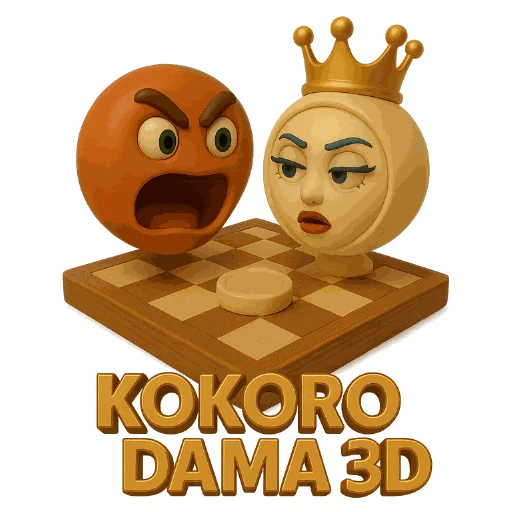
Overview
A 3D checkers game with a natural environment, ambient audio and touch controls. Included here as a technical case study: architecture, performance and release on a constrained platform.
Problem
A 3D board game has to feel smooth on mid-range Android phones, play fully offline and offer an opponent that is challenging without being unfair.
My role
Producer and developer: roadmap, backlog, development, QA, publication and maintenance on Play Console.
Challenges
- Keep draw calls and loading light on mobile hardware.
- Generate the board and manage pieces dynamically.
- Tune an adaptive AI and a two-player mode on the same device.
Solution
A component-based architecture in Unity 6, dynamic board generation and a mobile-first rendering budget, released through Play Console with a no-ads, no pay-to-win model.
Architecture & approach
- Component-based gameplay architecture in C#.
- Dynamic board generation and piece management.
- Adaptive AI opponent and local multiplayer.
- URP with reduced draw calls and lightweight loading.
Technology
Outcome
Published on Google Play, following Kokoro Dama, the native Android / Java version with a Minimax AI.
Lessons learned
- A performance budget set on day one is cheaper than optimisation at the end.
- AI difficulty is a UX problem, not only an algorithm.